Private Label Perfume Packaging: A Buyer’s Approval Guide
A practical control guide for brand buyers, importers and distributors who need to turn bottles, pumps, caps, labels and boxes into one approved private label perfume pack.
Private label perfume packaging should not be approved from a catalogue image or a box rendering alone. A sellable pack is a connected system: the bottle neck must match the pump, the cap must fit the assembled closure, the decoration must survive handling, and the finished bottle must sit correctly inside the insert and retail box.
The buyer’s job is not to design every component personally. It is to make each decision traceable and to stop one late change from silently invalidating earlier approvals. This guide focuses on the documents, samples and checks that make a packaging decision usable for quotation, production and repeat orders.
It does not assume a fixed MOQ, price, certification, capacity or lead time. Those depend on the selected component route, quantity, decoration, destination market and confirmed project scope.
1. Build a Packaging Brief Before Requesting Prices
“I want a luxury bottle and box” is not a packaging brief. It leaves the supplier to guess the bottle size, closure, decoration, brand position, quantity split and destination-market text. Those guesses produce quotations that cannot be compared.
- Destination market and sales channel
- Product type, bottle size and number of SKUs
- Existing wholesale product, adapted stock pack or deeper OEM/ODM development
- Reference images separated into “must have” and “visual direction only”
- Logo, color direction, decoration preference and box style
- Estimated quantity by SKU and expected reorder pattern
- Known language, barcode and responsible-party information
- Target retail position and the decisions that remain open
Use the private label perfume service when the project starts from an existing or adaptable product direction. If the fragrance, component structure or packaging requires deeper development, compare the OEM/ODM route before treating any quotation as final.
2. Choose Stock, Decorated Stock or Custom Development
The most expensive-looking route is not automatically the best route. Buyers should choose the level of customization that matches the launch risk, assortment size and need for differentiation.
| Route | Buyer controls | Main approval risk |
|---|---|---|
| Stock pack | Select an existing bottle, pump, cap and box direction | Assuming a catalogue image proves current availability or exact specification |
| Decorated stock pack | Add label, print, coating, color, foil or branded box to existing components | Approving decoration separately from the physical pack |
| Custom component development | Define new shapes, tooling, structures or more complex finishes | Releasing dependent components before dimensions and interfaces are stable |
3. Control Bottle, Pump, Collar and Cap as One System
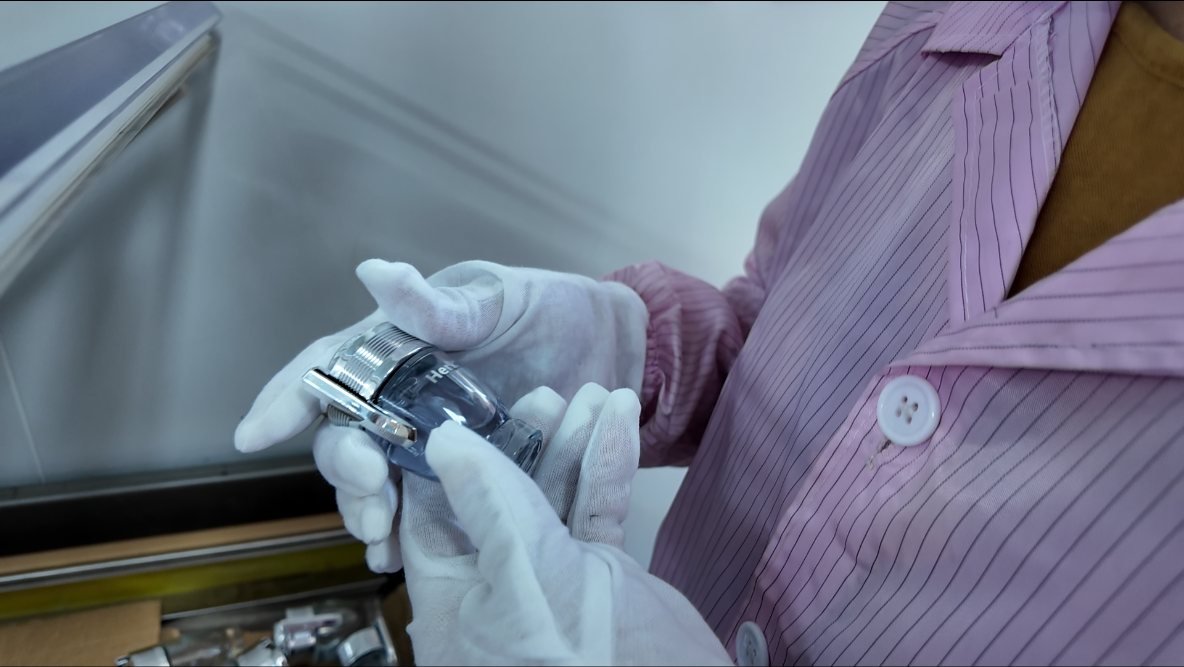
A bottle can look correct and still be unusable with the selected pump or cap. Record each component in a packaging bill of materials rather than relying on one product photo.
| Component | Record before approval | Buyer check |
|---|---|---|
| Bottle | Reference, nominal size, dimensions, neck, glass appearance and decoration area | Matches the intended fill, label or print area and retail position |
| Pump and seal | Reference, mounting method, tube, actuator and finish | Fits the neck, sprays consistently and closes as intended |
| Collar | Reference, dimensions, finish and orientation | Covers the closure correctly without interfering with the cap |
| Cap | Reference, material, fit, finish and logo orientation | Seats securely and does not damage decoration during use |
Ask what the physical sample represents. A visual cap sample may show color but not final fit. A bottle sample may show shape but not final decoration. The approval record should state those limits.
Confirm compatibility with the intended fragrance
The selected fragrance and the final primary pack should be considered together. Ask how the intended liquid, bottle, pump and sealing method will be represented in samples and what observations will be made before bulk release. Do not treat a generic pump demonstration as approval for every formula and bottle combination.
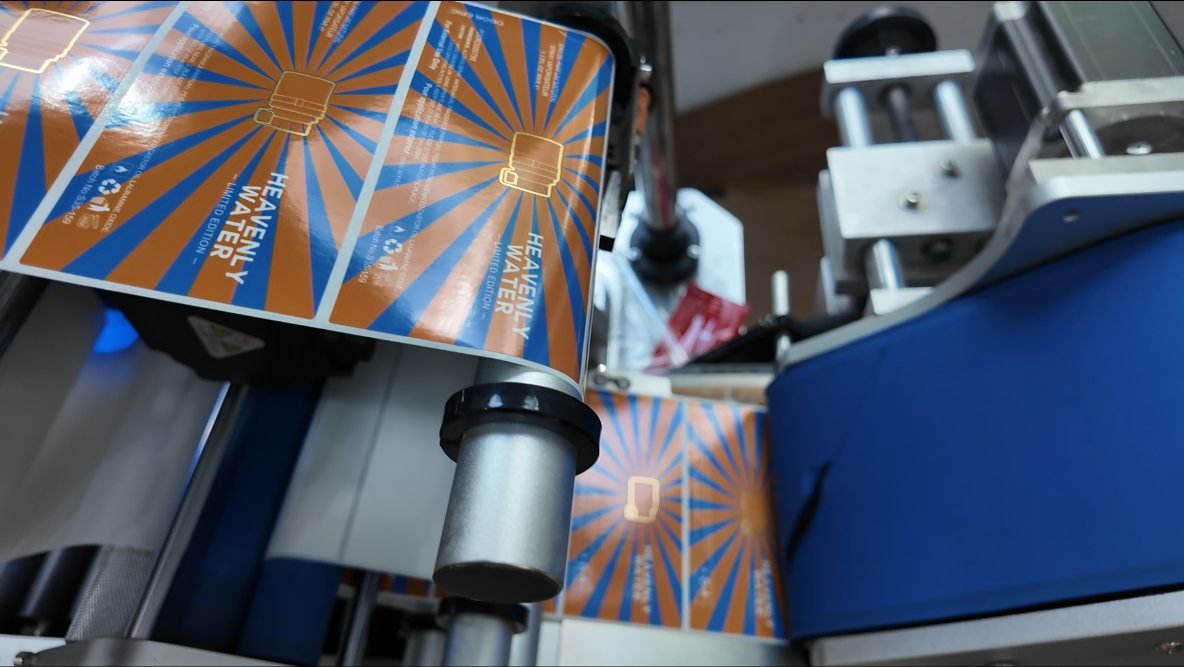
4. Release Labels, Decoration and Artwork With Version Control
Artwork errors are difficult to correct after printing or decoration. Use one release sheet that lists every printed or decorated surface and the current file version.
- Bottle print, coating, label or other decoration method
- Logo position, size, color reference and orientation
- Front, back, base and side text responsibilities
- Box dieline and insert drawing
- Barcode, batch-code area and any variable information
- Language version and buyer-approved market text
- File name, revision, approval date and approver
- Known differences between proof, sample and intended bulk result
The importer or brand owner should verify destination-market requirements with qualified local advisers. The supplier should confirm what it will print and which files it has received; it should not be asked to invent unverified market claims or legal text.
5. Fit the Bottle, Insert, Retail Box and Shipping Pack
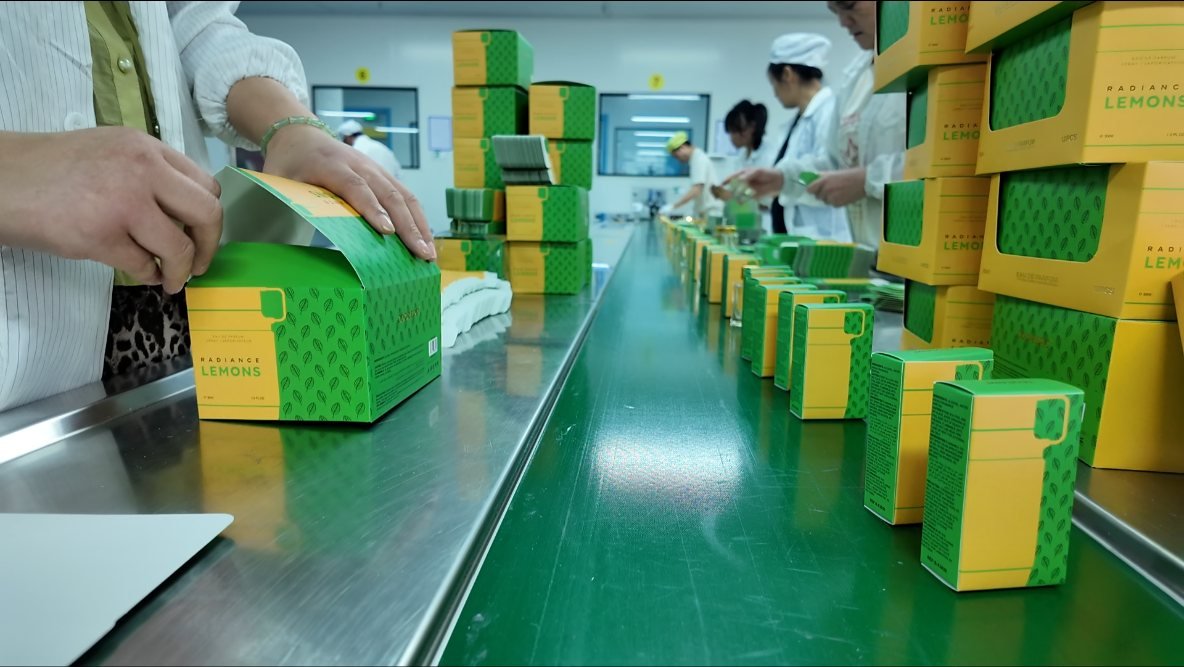
The box should be sized from the assembled bottle, not from the bottle body alone. Confirm the cap, decoration and any protruding features before the insert and box are released.
| Packaging level | What to confirm | Failure to prevent |
|---|---|---|
| Insert | Material, cutout, orientation and retention of the finished bottle | Loose movement, scuffing or difficult removal |
| Retail box | Internal dimensions, board, closure, finish and assembled appearance | Crushing, poor alignment or bottle-to-box mismatch |
| Gift set | Position of every product, accessory and insert | Components colliding or shifting in transit |
| Shipping carton | Units per carton, dividers, protection, marks and dimensions | A retail pack that looks good but is not protected for the agreed shipment |
Buyers considering compact formats can use the 30ml perfume category as a product reference and the 30ml gift set category as a starting point for insert and set planning. Final dimensions still require an exact approved configuration.
6. Approve the Assembled Packaging Sample
Component samples reduce risk, but the final decision should be based on an assembled pack that represents the intended configuration as closely as practical. One approval message should identify the status of every critical element.
- SKU, sample code, date and revision
- Fragrance and fill represented
- Bottle, pump, collar, cap and closure represented
- Decoration, label, box and insert represented
- Known substitutions or differences from intended bulk goods
- Spray, closure, cap fit, label position and box fit observations
- Photos of the approved front, back, base and assembled pack
- Status: approve, approve with listed conditions, or revise
7. Set Bulk Packaging Checkpoints Before Production
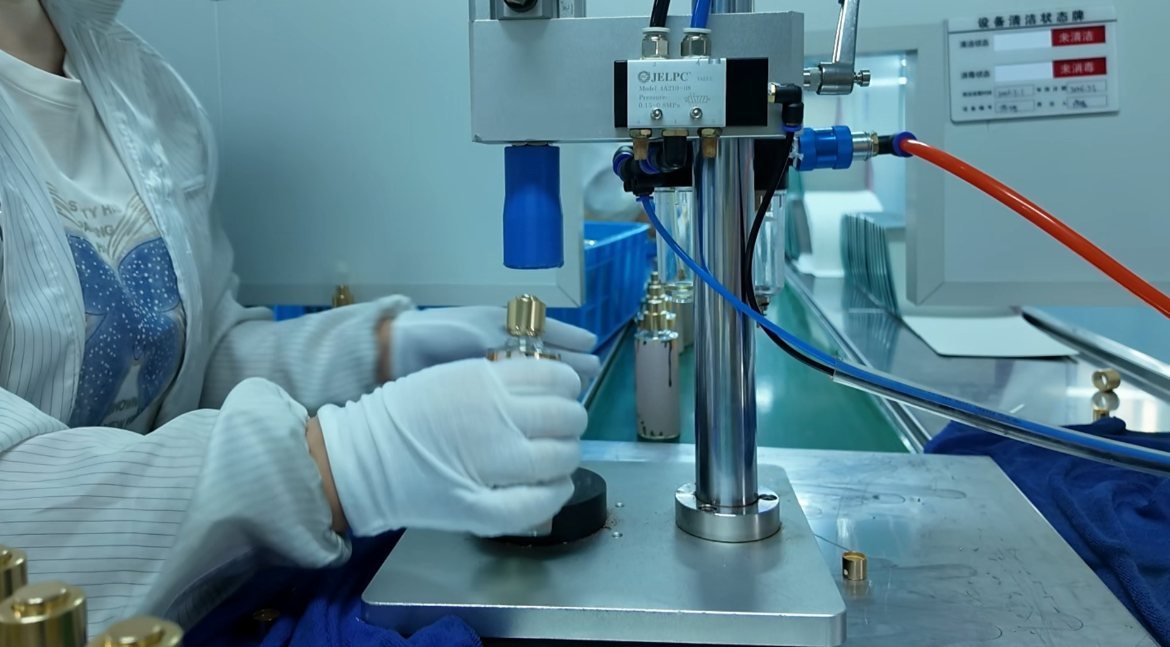
“Check quality before shipping” is too vague. Agree what evidence will be checked when components arrive, when the pack is assembled and before cartons are released.
| Checkpoint | Evidence to request or review |
|---|---|
| Incoming components | Correct references, colors, finishes, quantities and visible condition |
| Line setup | Current sample, artwork, SKU and packing references available to the team |
| Assembly | Pump mounting, cap fit, decoration position, label position and box assembly |
| Finished pack | Appearance, function, SKU identity, batch-code area and retail-pack completeness |
| Carton release | Units per carton, dividers, marks, counts and packing-list reconciliation |
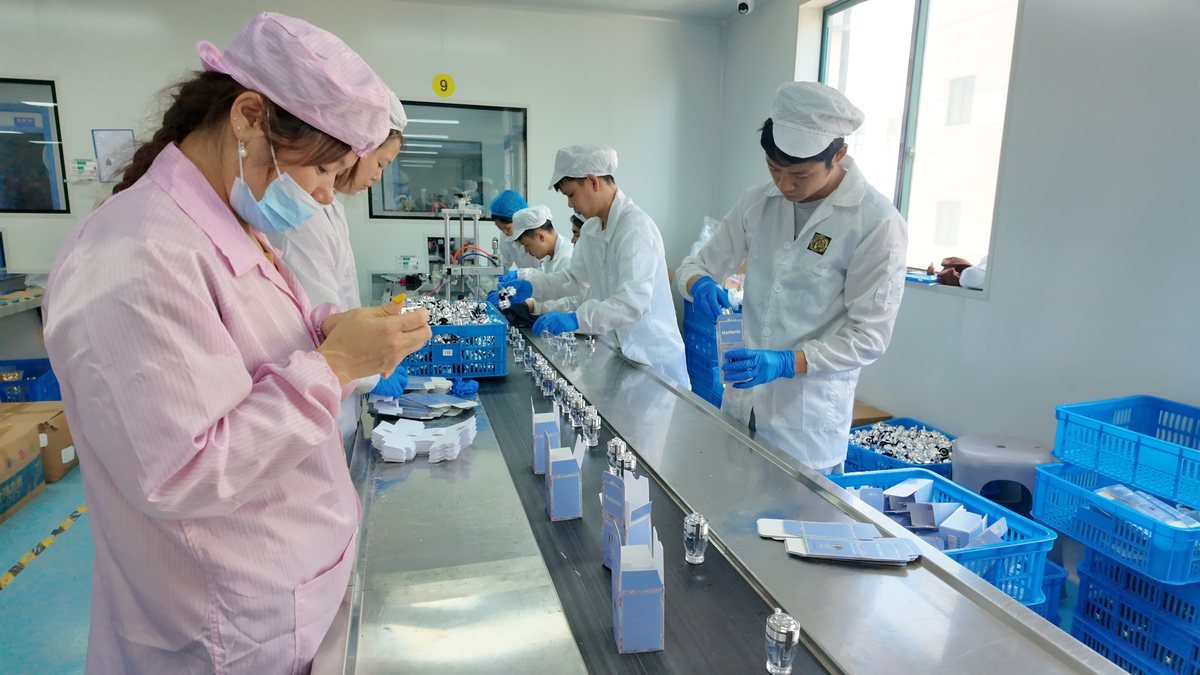
The purpose of the checkpoint is not to create a large photo folder. It is to prove that the current order matches the approved packaging reference. Songzi’s perfume quality control overview and factory workflow provide related process context.
8. Compare Packaging Quotations on the Same Scope
A packaging quotation is incomplete if the buyer cannot tell which components, finishes, samples, tooling, packing and assembly steps are included. Normalize quotations before comparing totals.
- Which exact bottle, pump, collar and cap references are included?
- Which decoration, label, box, insert and shipping pack are included?
- Which sample or proof stages are included, and what remains provisional?
- Are artwork preparation, assembly, packing and carton protection included?
- Which quantities apply to each component and each finished SKU?
- What changes could affect the confirmed price or schedule?
- Which items are supplied by the buyer or a third party?
Use the wholesale route when the priority is an existing product assortment with controlled customization. Use private label or OEM/ODM when the brief requires a different level of development. Do not compare these routes as if the scope were identical.
9. Protect Repeat Orders With Change Control
A reorder should reuse the approved bill of materials, artwork versions, sample codes and packing plan. Require written notice before any bottle, pump, cap, finish, label stock, box material, insert or assembly method is changed.
If a component becomes unavailable, document the proposed substitute and identify every dependent decision. A new cap may change box height; a new pump may change collar fit; a new label material may change adhesion or appearance. Approve the affected sample or specification before releasing the reorder.
10. Final Private Label Packaging Release Checklist
- Every SKU has a complete packaging bill of materials.
- The sourcing route and quotation scope are clear.
- Bottle, pump, collar and cap references are compatible and traceable.
- Decoration and label specifications identify position, color and version.
- Box and insert are based on the assembled bottle configuration.
- Artwork files, market text, barcode and batch-code areas are approved.
- The assembled sample has a code, revision, photos and written status.
- Bulk checkpoints and carton requirements are agreed.
- Known differences and open decisions are closed before release.
- Repeat-order change control is recorded.
Have a packaging reference already? Send the destination market, bottle size, product shortlist, quantity by SKU, logo files and packaging direction through the private label project inquiry. Songzi can review which decisions still need to be defined before a comparable quotation is prepared.
FAQ for Private Label Perfume Packaging Buyers
What should a private label perfume packaging specification include?
Record the exact bottle, neck, pump, collar, cap, decoration, label, box, insert and shipping pack for each SKU, together with supplier references, dimensions, finishes, artwork versions and approved sample codes.
Should perfume packaging be approved component by component?
Components can be reviewed separately, but final approval should cover the assembled pack because bottle, pump, cap, decoration, insert and box can affect one another.
How can a buyer reduce perfume packaging leakage risk?
Confirm the exact bottle neck, pump and sealing method, test the intended fragrance in the selected pack, record the approved sample, and agree how closure, spray and leakage observations will be checked for bulk goods.
What should be approved before perfume box printing?
Approve the dieline, dimensions, insert, materials, colors, finishes, barcode, market text, batch-code area and final artwork version. Use the approved bottle and cap to confirm the physical fit.
How should packaging changes be controlled on repeat orders?
Reuse the approved packaging bill of materials and artwork versions, require written disclosure of any component or process change, and approve the affected sample or specification before the reorder is released.
Turn Your Packaging References Into an Approval-Ready Brief
If you have a destination market, bottle size, quantity by SKU, logo file and packaging direction, Songzi can review the project scope and identify the decisions still needed before quotation.
Request a QuoteWhatsApp Mandy