Perfume MOQ Explained: How Private Label Buyers Should Plan SKUs, Bottles and Packaging
Calculate the minimums inside the finished product before committing to fragrance, bottle, pump, cap, label and box inventory.
A buyer plans three 50 ml fragrances and asks a factory for “the MOQ.” That question sounds precise, but it can refer to at least six different minimums: the filling run, the quantity per fragrance, the bottle order, the pump and cap order, the label run and the printed box run.
If those minimums do not align, the buyer must change the specification, increase finished units, or purchase packaging that will remain unused after the first production run. The useful question is therefore not “What is your MOQ?” It is:
For this SKU plan and this packaging specification, which component sets the binding minimum, and what inventory remains after the planned filling quantity?
This guide shows private label buyers how to answer that question before comparing quotations. It does not state or imply a Songzi MOQ, price, production capacity or lead time. Every numerical example is hypothetical and must be replaced by written supplier quotations for the buyer’s actual project.
Separate the Minimums Before You Compare Suppliers
A finished perfume is an assembly of materials purchased and processed through different supply chains. One supplier may describe MOQ as finished bottles. Another may quote per fragrance. A bottle decorator may quote per color. A printer may quote per artwork version.
Build a component matrix with one row for every SKU and separate columns for:
- fragrance or formula reference;
- fill volume;
- bottle reference, color and neck finish;
- pump, collar and dip tube;
- cap reference and finish;
- bottle decoration or label version;
- retail box and insert version;
- finished quantity;
- component purchase quantity;
- expected leftover quantity; and
- owner and storage location of leftovers.
ScentOEM’s MOQ guide makes the same central point: the project minimum is determined by the component or process with the highest applicable minimum after the specification is defined. Treat this as a sourcing principle, not as a universal industry quantity. Each factory and packaging supplier must confirm its own terms in writing.
Procurement planning recommendation: Ask suppliers to identify each minimum separately. Do not accept one total number without knowing whether it applies to the whole order, each fragrance, each bottle color or each printed artwork.
A Specific Three-SKU Calculation Example
The following is a fictional planning case. It is not a Songzi quotation and does not represent a standard industry MOQ.
Buyer’s intended launch
| SKU | Fragrance | Bottle | Label | Printed box | Planned finished units |
|---|---|---|---|---|---|
| A | Floral | Shared clear 50 ml bottle | Artwork A | Artwork A | 500 |
| B | Woody | Shared clear 50 ml bottle | Artwork B | Artwork B | 500 |
| C | Fresh | Shared clear 50 ml bottle | Artwork C | Artwork C | 500 |
| Total | 3 fragrances | 1 shared bottle specification | 3 label versions | 3 box versions | 1,500 |
Hypothetical supplier responses
| Item | Hypothetical minimum | How it applies |
|---|---|---|
| Filling | 500 units | Per fragrance |
| Stock bottle | 1,500 units | Shared across the project |
| Pump and cap set | 2,000 sets | Shared across the project |
| Printed label | 1,000 labels | Per artwork version |
| Printed retail box | 1,000 boxes | Per artwork version |
The intended filling plan satisfies the hypothetical filling minimum: 500 units × 3 fragrances. It also uses 1,500 bottles. However, the project would require 2,000 pump and cap sets, 3,000 labels and 3,000 printed boxes.
If the buyer fills only 1,500 finished units, the first run leaves:
- 500 pump and cap sets;
- 500 labels for SKU A, 500 for SKU B and 500 for SKU C; and
- 500 boxes for SKU A, 500 for SKU B and 500 for SKU C.
The buyer now has three valid planning options:
- Increase finished quantity to 1,000 units per SKU. This consumes the hypothetical label and box runs but creates a larger launch inventory.
- Keep 500 finished units per SKU and purchase the full packaging runs. This requires written agreement on ownership, storage, condition, future use and disposal of the 1,500 unused labels and 1,500 unused boxes.
- Change the packaging route. For example, use a shared stock box with an SKU label or choose a different decoration method, subject to actual availability, quotation and market-position requirements.
The lowest finished-product quantity is not always the lowest-risk decision. Option 2 may protect launch inventory but creates packaging inventory that can become obsolete if artwork, legal text, barcode, bottle dimensions or brand direction changes.
Procurement planning recommendation: Calculate two quantities for every component: the quantity purchased and the quantity consumed in the planned filling run. The difference is inventory exposure.

Bottle Decisions Affect More Than Bottle Quantity
A bottle choice controls the package footprint, fill volume, neck specification, decoration area, shipping weight and the dimensions required for the insert and retail box.
For each bottle, confirm:
- exact supplier reference;
- nominal capacity and intended fill volume;
- bottle dimensions and weight;
- neck finish;
- available color or coating;
- decoration area and method;
- current stock status or production route;
- quantity shared across SKUs; and
- whether a substitute may be proposed later.
A “stock bottle” normally means the design already exists. It does not automatically mean unlimited stock, permanent availability or compatibility with every pump and cap. Request the current component reference and an assembled sample.
If a custom bottle mould is proposed, separate tooling approval from production quantity. KeepMe, for example, publishes different thresholds for its own stock-component service and bespoke glass mould route. Those figures describe KeepMe’s service, not Songzi’s terms or a universal rule, but they illustrate why stock and custom routes should never be compared as the same project.
Buyers who want to discuss an existing product route can review Songzi’s Wholesale Perfume service. Projects requiring broader product and packaging development should be scoped through OEM/ODM Perfume Manufacturing.
Pump and Cap Minimums Must Follow Compatibility
The pump is not a decorative accessory selected after the bottle. Its fixation and neck finish must match the bottle. The collar and cap must also fit the assembled closure.
Aptar’s official fragrance-pump specifications show why a generic request for “a perfume pump” is insufficient. Its 31 MS range, for example, lists separate crimp, screw-on and snap-on neck finishes. Other Aptar pump ranges list additional neck and dosage options. This does not prescribe what Songzi must use; it provides primary-source evidence that pump selection is specification-dependent.
For each pump and cap set, record:
- pump supplier reference;
- fixation method and neck finish;
- dosage or spray specification where available;
- dip-tube specification;
- collar material, color and finish;
- cap reference, internal fit and orientation;
- assembled height; and
- the bottle sample used for the fit check.
Do not purchase a pump quantity only because its color matches the cap. First confirm that the pump fits the bottle, the cap fits the closure and the assembled set fits the intended box.
Procurement planning recommendation: Approve the bottle, pump, collar and cap as one component set. Any substitution should trigger a fit review and, where relevant, a new assembled sample.
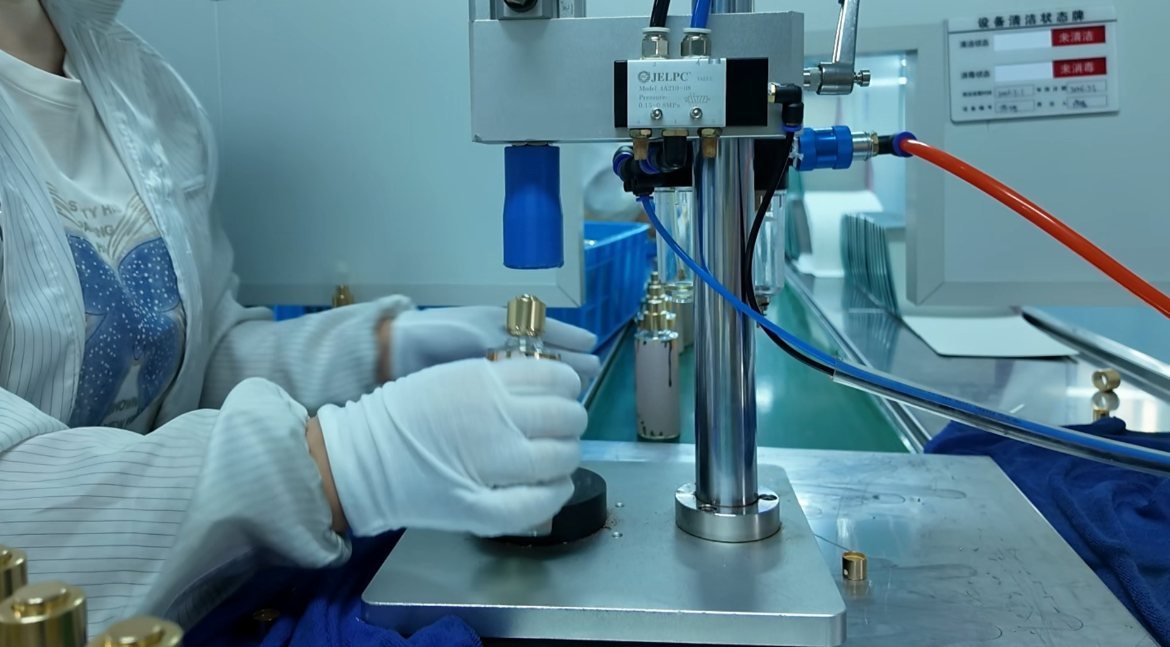
Labels and Boxes Create SKU-Specific Inventory
Shared bottles and pumps can often be allocated across several fragrances. Printed labels and boxes usually cannot because they carry an SKU-specific fragrance name, barcode, color, ingredient or market text.
This creates an important difference between physical inventory and usable inventory. A buyer may own 3,000 boxes, but if each of three designs has 1,000 pieces, those boxes cannot automatically be reassigned when one fragrance sells faster than another.
Before releasing labels or boxes, confirm:
- number of artwork versions;
- print quantity per version;
- setup, plate or proof requirements;
- label material, adhesive and application area;
- box structure, board, insert and finish;
- barcode and destination-market text;
- batch-code area;
- approved file name and revision;
- ownership of unused printed materials;
- storage period and storage conditions; and
- what happens if the next order uses revised artwork.
Brandsamor’s pricing guide lists bottle, closure, decoration, packaging, quantity, destination and documentation as factors affecting its quotations. Its published prices and minimums apply only to Brandsamor. The useful evidence for buyers is the cost structure: changing one component can change more than unit price. It can also change run quantity, freight weight, assembly and unused inventory.
For a detailed approval process, use Songzi’s Private Label Perfume Packaging Approval Guide.
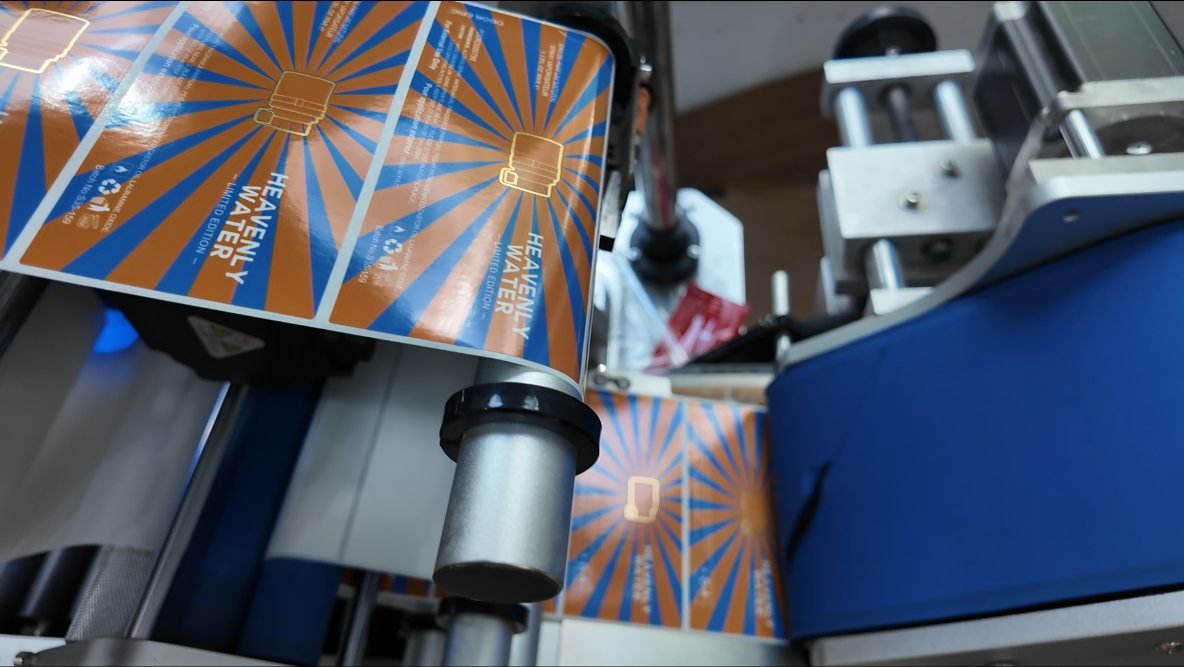
Stock Packaging and Custom Packaging Solve Different Problems
| Decision | Stock packaging route | Custom packaging route |
|---|---|---|
| Differentiation | Comes mainly from fragrance, label, decoration and box | Can include a unique component structure or mould |
| Minimum drivers | Current stock, filling, decoration and printed materials | Tooling, development, component production, decoration and printed materials |
| Approval work | Confirm exact available components and finished decoration | Approve drawings, tooling samples, interfaces and dependent components |
| Inventory risk | Risk of availability changes or later component substitution | Risk of larger component commitment and obsolete custom stock |
| Best planning use | Testing a market, controlling launch inventory or simplifying multiple SKUs | Building a distinctive pack when demand and budget justify deeper development |
Stock packaging is not automatically low quality. Custom packaging is not automatically commercially better. The correct route depends on differentiation needs, number of SKUs, launch risk and the buyer’s ability to use or finance packaging inventory.
Procurement planning recommendation: If several fragrances share the same bottle, pump and cap, use decoration and printed components to create controlled differentiation. If the bottle itself must be unique, calculate tooling, component inventory and replacement risk before approving the design.
Songzi’s Private Label Perfume page explains the branded-product route, while the China Perfume Factory page provides factory-process context.
Normalize Quotations Before Comparing MOQ
Two suppliers can both answer “1,000 pieces” while quoting different scopes. One may mean 1,000 finished bottles using stock components. Another may mean 1,000 units per fragrance with packaging purchased separately.
Send every supplier the same table and request these fields:
| Field | What the answer must show |
|---|---|
| Finished MOQ | Total order and minimum per fragrance/SKU |
| Formula or fragrance | Stock, adjusted or newly developed route |
| Bottle | Reference, color, decoration and purchase quantity |
| Pump and cap | References, finish, purchase quantity and compatibility status |
| Label | Quantity and setup per artwork version |
| Box | Quantity and setup per artwork version |
| Leftovers | Quantity, owner, storage period, condition and disposal terms |
| Samples | What each sample represents and what remains provisional |
| Documents | Documents included for the exact product and destination discussion |
| Exclusions | Tooling, artwork, packing, freight, duties or other excluded work |
Do not compare only the unit price. Compare cash committed, finished units received, packaging inventory remaining and the decisions still open.
Songzi’s Wholesale Perfume Supplier Checklist covers the wider supplier-review process.
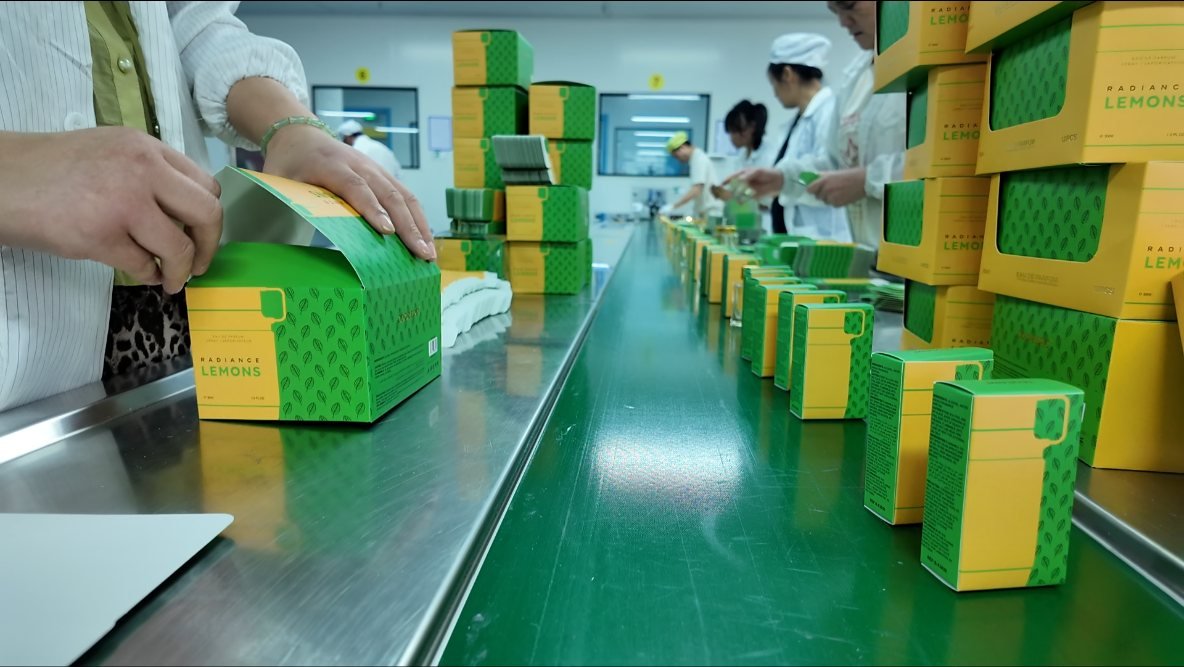
Decide Who Owns Leftover Components
Unused components should never remain an informal promise in a chat history. Record:
- buyer or supplier ownership;
- exact quantity by component and artwork version;
- storage location;
- packaging and identification method;
- storage period;
- access for count or evidence;
- responsibility for damage, loss or deterioration;
- conditions for use in a repeat order; and
- disposal or return instructions.
An unused plain bottle may be reassigned if its specification remains suitable. A printed box with an old barcode or fragrance name may have no alternative use. Treat those inventories differently.
NoseMuse’s quality-control guide recommends a written specification and an identifiable approved reference for each SKU. That supports the same procurement discipline: inventory is useful only when it can be matched to the current approved product.
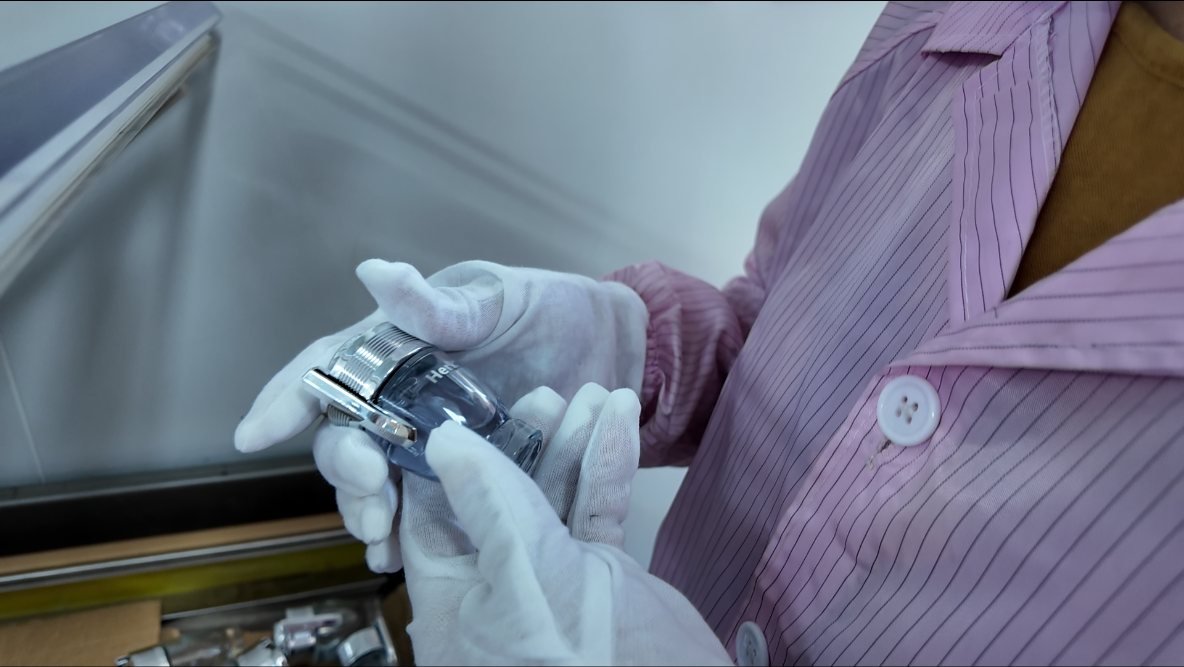
Send Your SKU and Packaging Brief
Complete this information before asking Songzi or another supplier for a comparable project review.
Also attach reference images and mark each one as either “required feature” or “visual direction.” If a field is unknown, write “open for recommendation” instead of forcing the supplier to guess.
When these inputs are ready, use Songzi’s Request a Quote page or contact Mandy on WhatsApp. The purpose of the first review is to identify the binding component minimum and the decisions needed for a comparable quotation.
FAQ
Is perfume MOQ normally total quantity or per fragrance?
It can be either. Ask the supplier to state the total finished minimum, minimum per fragrance or SKU, and every component minimum separately. Do not infer one from the other.
Can several perfume SKUs share one bottle MOQ?
They may be able to share the same bottle purchase when the bottle specification, decoration and availability are common. Labels, printed boxes and fragrance filling can still have separate minimums by SKU. The supplier must confirm the allocation in writing.
Why can the box MOQ be higher than the perfume filling quantity?
Printing and converting are separate production processes with their own setup and run conditions. When the printed-box quantity exceeds the filling quantity, calculate unused boxes and agree ownership, storage and future use before ordering.
Does using a stock perfume bottle guarantee a low MOQ?
No. A stock design can reduce tooling and development work, but the project may still be constrained by current availability, decoration, pumps, caps, labels, boxes, fragrance quantity or SKU count.
What is the safest way to compare perfume MOQ quotations?
Send the same SKU and component matrix to every supplier. Compare finished units, component purchase quantities, leftovers, included work, samples, documents and exclusions, not only the headline MOQ or unit price.
What information should I send Songzi for an MOQ review?
Send the target market, number of fragrances or SKUs, bottle capacity and type, cap and sprayer requirements, label and gift-box requirements, estimated quantity by SKU and expected launch time. Reference images and open decisions also help define the scope.
Evidence and source notes
- ScentOEM MOQ guide: component-driven MOQ framework; supplier-specific statements are not presented as Songzi terms.
- Aptar 31 MS official specifications: primary-source evidence for different fixation and neck-finish configurations.
- KeepMe low-MOQ service: an explicit supplier example comparing stock components with bespoke moulds.
- Brandsamor pricing guide: quotation drivers only; its commercial terms are not generalized.
- NoseMuse quality-control checklist: written specification and approved-reference practices.
Send Your SKU and Packaging Brief
Prepare your target market, SKU count, bottle capacity, bottle type, packaging requirements, estimated quantity by SKU and expected launch time. Songzi can then review the project scope and identify the decisions needed before quotation.
Request a QuoteWhatsApp Mandy